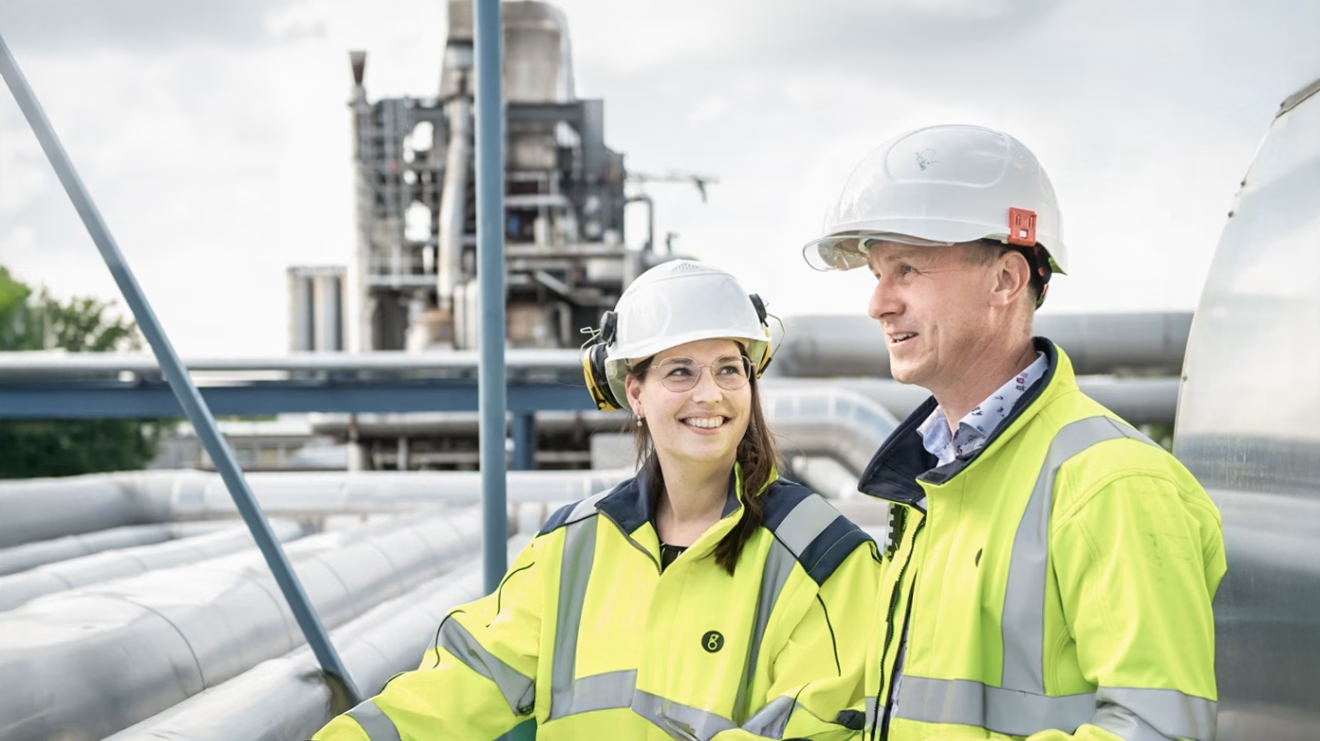
Meeting the complex energy requirements for food processing
The food and dairy industries are energy-intensive and have very high operational requirements for heating, cooling, drying and production. The security of the energy supply is crucial, to optimise uptime and keep processes to defined schedules. GETEC provides customised solutions that focus on process safety and quality while also ensuring sustainable and efficient energy use. These solutions adhere to strict hygiene, production and regulatory standards, enabling our customers to focus on their core business.
Energy efficiencyand renewable sources
Reliable, cost-efficient and optimised energy solutions – in the complex food and dairy industry, GETEC manages and operates the entire energy supply and related infrastructure, enabling our customers to meet their current and future energy needs. As GETEC takes on the long-term management of energy projects with Managed Energy Infrastructure, customers benefit from more predictable energy costs, lower risks and minimised upfront investments.
Proven partner for food and dairy
- Reliable energy supply
- Predictable energy costs
- Nonstop operation
- Avoid upfront investments
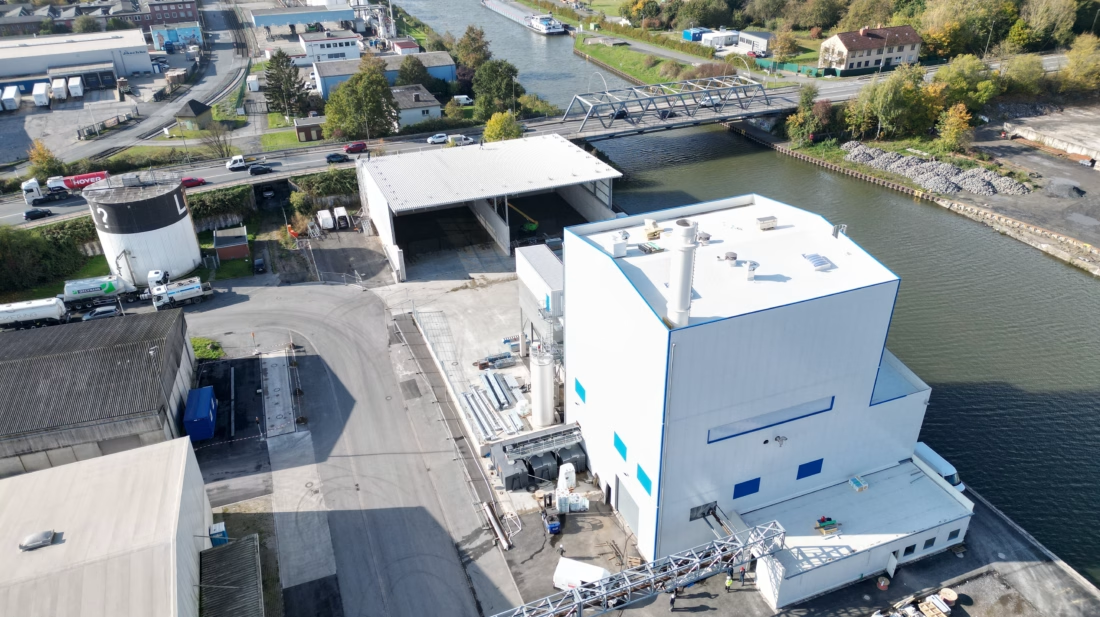

With our technology-open approach, we develop customised energy solutions for food and dairy companies to help them meet their sustainability goals and ensure long-term competitiveness and economic performance.
CEO Germany & CTO
GETEC
Latest insights
-
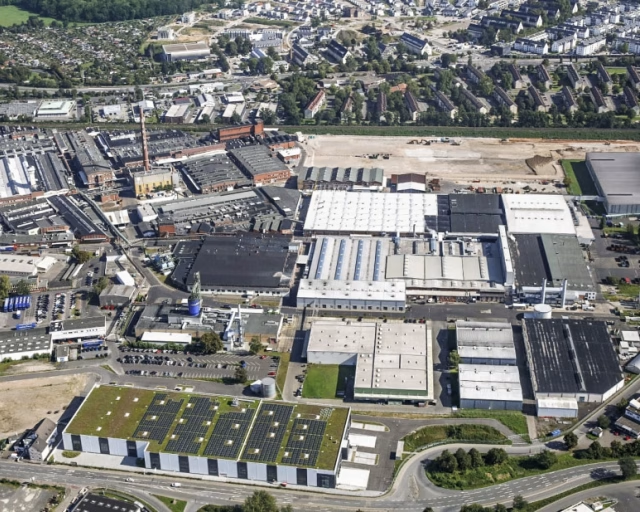
Manufacturing tyres with energy from biomass at Goodyear
Read more -
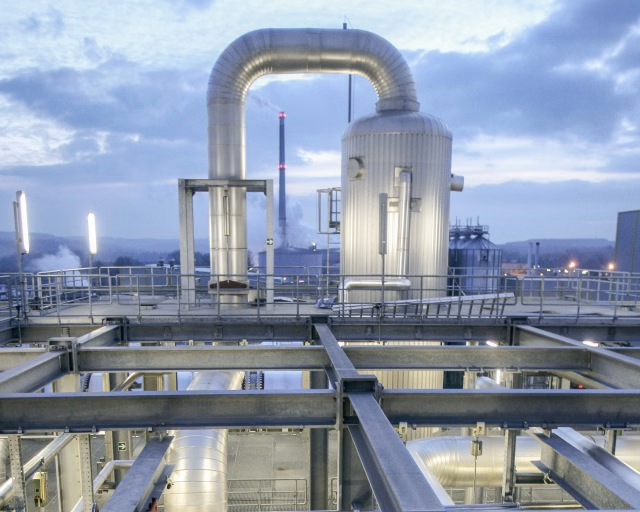
Climate-neutral energy solution for ethyl acetate plant
Read more -

Waste heat from a data centre keeps households warm
Read more -
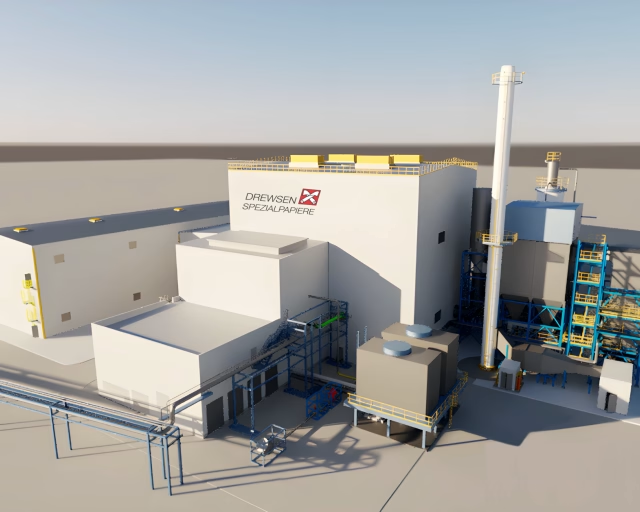
Powering a paper mill with straw and waste wood
Read more -

Geothermal energy powers new residential district in Bayreuth
Read more -
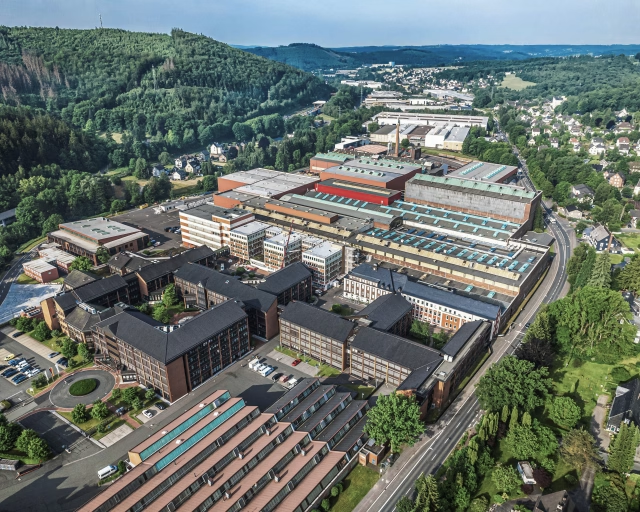
Unique power-to-heat system at German metallurgical site
Read more -
Recovered waste heat warms 5,000 households
Read more
FAQ
How is Managed Energy Infrastructure beneficial for the food and dairy industry?
When a specialised partner provides an energy and infrastructure solution as-a-service, food and dairy companies benefit from on-site renewable energy generation and energy-efficient technologies, such as heat pumps, waste-to-energy systems and heat recovery processes. This helps companies to manage rising costs and meet their sustainability goals.
What is energy management in the food industry?
This involves using energy management systems to monitor, control and optimise energy use throughout the entire production process. Effective energy management can help to reduce costs, minimise waste and improve efficiency.
What are the best energy solutions for the food industry?
A customised energy solution that specifically meets the needs of the customer and adheres to strict regulations is the best solution for the food industry. Ideally, the energy solution integrates renewable energy sources and uses state-of-the-art technology for heat pumps, refrigeration, thermal storage and vacuum pumping.
What forms of energy are used in the food industry?
The food industry uses natural gas, biomass, solar, wind power and steam as part of processes that involve heating, cooling, drying, pasteurisation and powering machinery. Fossil fuels, such as coal and oil, are being phased out as part of the transition towards renewable energy sources.
How much energy does the food industry consume?
Worldwide, it is estimated that the food industry consumes around 30% of the world’s available energy. This includes production, processing and packaging, with heating, drying and cooling all requiring significant amounts of energy.
Which energy solutions are particularly suitable for dairies?
Energy solutions for dairies include solar power, combined heat and power, and energy storage systems. Additionally, biogas systems that utilise energy from manure help to reduce waste and odours.
How can process waste heat be used in food production?
Using process waste heat in food production helps to reduce energy consumption and decarbonise operations. Examples include preheating ingredients, pasteurisation, drying and powering heat pumps. Heat can be recovered from exhaust air, wastewater and other industrial processes, then transferred to a separate heat circuit using a heat exchanger or an integrated heat recovery system.
How can cooling processes be made more energy efficient?
Cooling processes in food production can be made more energy-efficient by adopting smart technologies and improving overall process monitoring. This includes optimising chiller plants with advanced algorithms, implementing combined heat and power systems, and integrating sustainable energy sources. Natural refrigerants, ice storage tanks and heat recovery systems can also help to reduce energy consumption and costs.